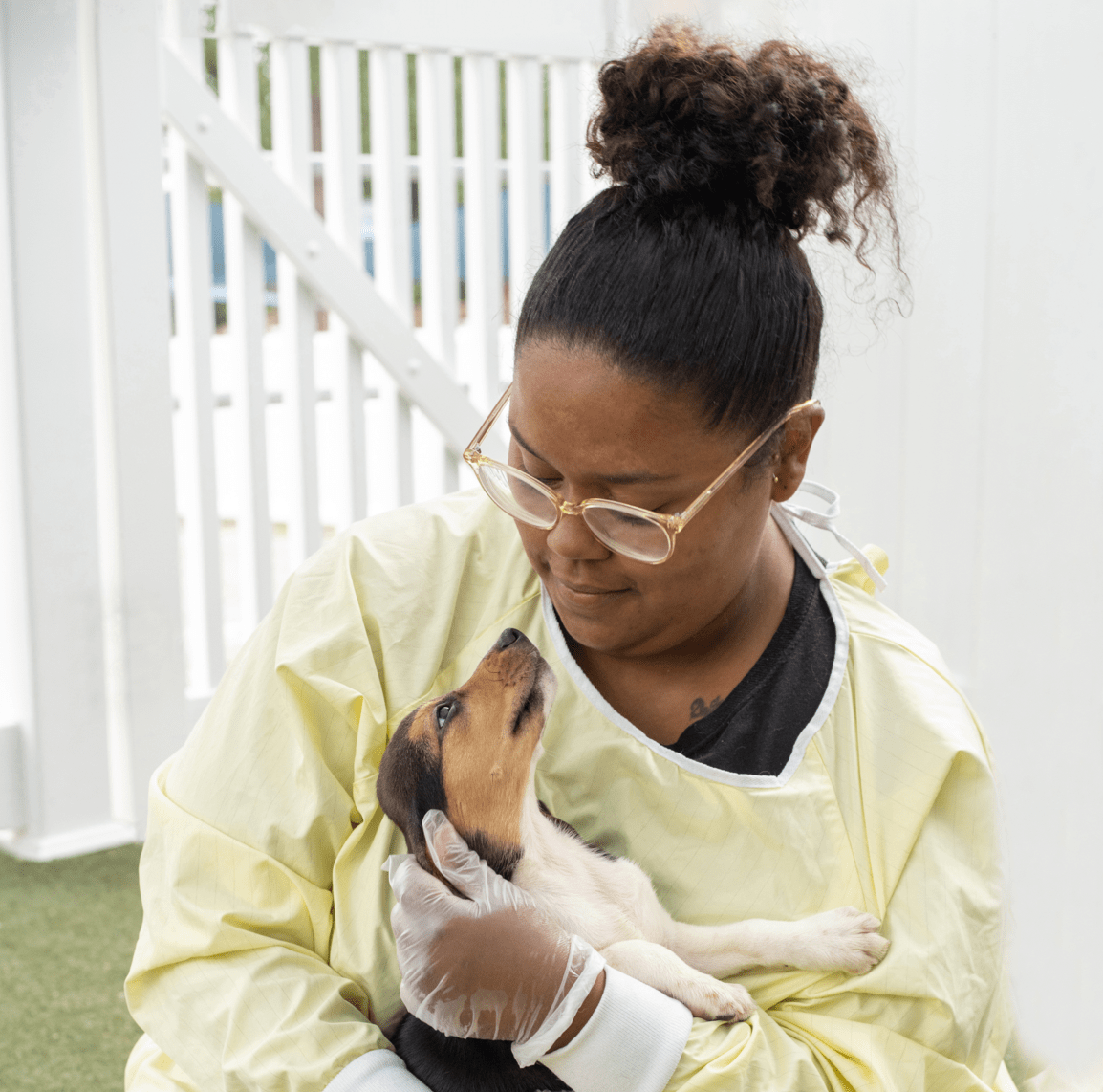
Michael Keiley, Director of Adoption Centers and Programs at the MSPCA-Angell, received a call from the Humane Society of the United States (HSUS). The national animal welfare nonprofit was preparing to receive dogs from a breeding facility in Virginia — 4,000 dogs, to be exact — over the next 60 days. And they needed help doing it.
UP FOR THE TASK, DESPITE THE CHALLENGES
The details were sparse at first. Keiley and his staff speculated what was going on. They knew there would be a large group of small to medium-sized dogs, but that’s about it. “We didn’t know if there were puppies or adult dogs, and that would affect how many we could take,” said Keiley. “So we just tallied up all of our available kennel space, sent it over to the HSUS, and said, ‘Here are the kennels we have; fill them however you want.’”
It would have been a challenging undertaking for most nonprofit animal welfare organizations. But the MSPCA-Angell staff were up for the monumental task. The MSPCA-Angell was initially one of ten animal welfare organizations in the United States that the HSUS asked to help, due not only to the nonprofit’s reputation but mainly because of its ability to assist in large-scale situations medically. “We are known for our veterinary resources — the medical depth within our organization is unmatched,” said Keiley. The MSPCA-Angell also has experience with law enforcement cases at home in Massachusetts, investigating and prosecuting the neglect and abuse of animals.
Keiley acknowledged it wasn’t easy given veterinary staffing shortages — a significant veterinary deficiency, not only at the MSPCA-Angell but throughout animal welfare across the country. “It was a huge ask for our staff to provide the medical care that these dogs needed, but that’s where the strength of our organization comes in,” he said. The influx of beagles took up all the surgical slots at the MSPCA-Angell Clinic in Boston to make room for dentals and spays and neuters. “But thanks to our donors, we’re able to provide these services in a way that most others can’t,” said Keiley. “And we’re known for our high medical standards — all the dentals we did on those dogs provide further evidence for the Department of Justice to use in court to prove these dogs were not being cared for.”
Michelle Harvanek, Director of Operations at Northeast Animal Shelter (NEAS), also knew that the case would be a heavy lift for her team. Still, they were prepared to help as much as they could. “We didn’t know what the group was going to look like and what medical issues they might have,” explained Harvanek.
NEAS, an MSPCA affiliate shelter, has the largest isolation space in the region for relocation, so they are considered the point shelter in more extensive operations like this one. But it would take some planning, even though no one was sure when the transport would happen.
“Massachusetts has strict animal transport requirements,” explained Harvanek. For NEAS to take the dogs, the HSUS had to remove them from the breeding facility and station them at the HSUS shelter so they could get their medical records up to date per the state requirements and create health certificates. Then the dogs would have to be quarantined for 48 hours and checked by a veterinarian before they could be released from that space.
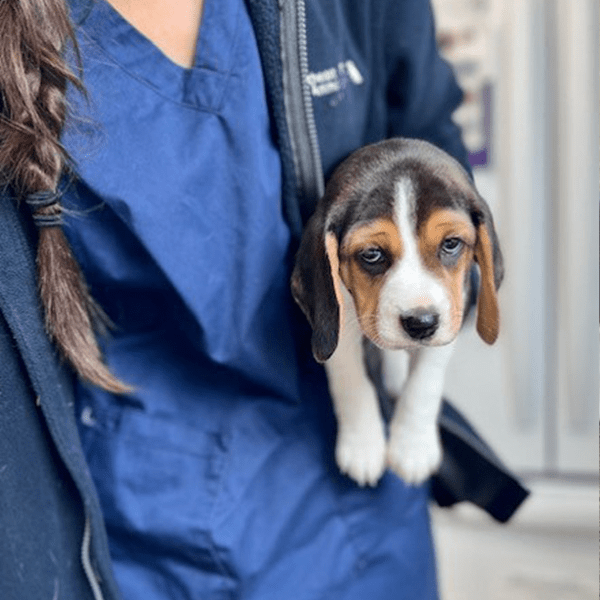
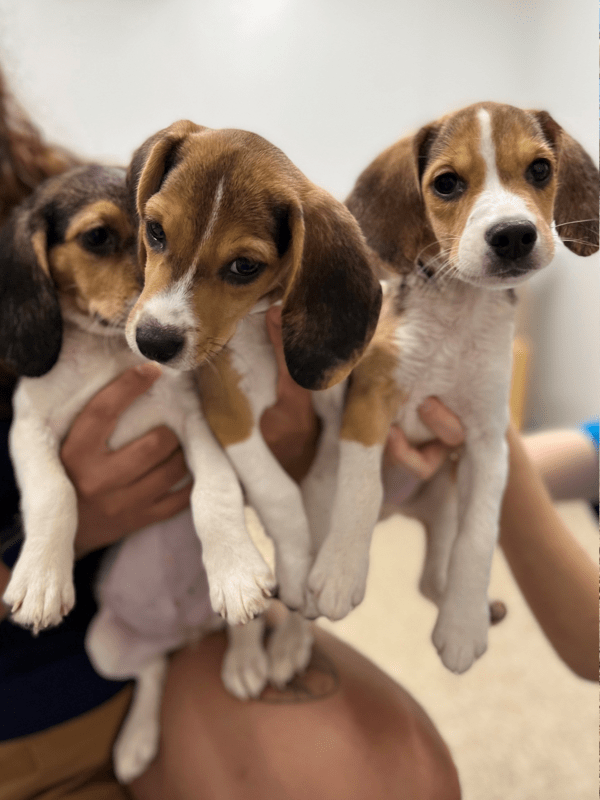
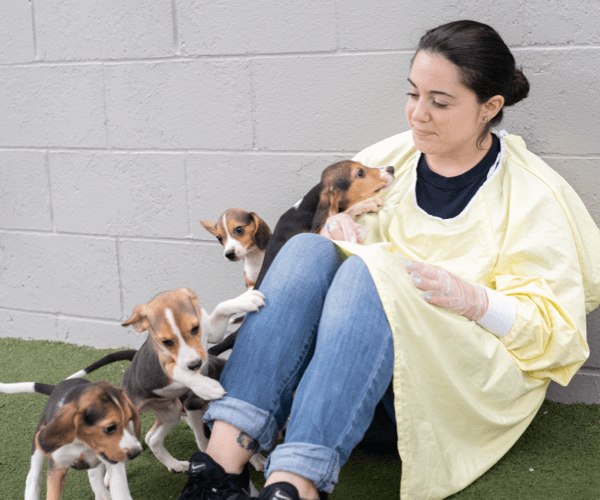
“NEAS put a call out to our staff to see who would be interested in driving down to pick up the dogs — and just do a once-over to see what the group of dogs looked like so we could plan from there,” she explained. The night before three staff members were supposed to drive to Virginia, Harvanek got a call from the HSUS. “They said they had 75 eight-week-old puppies and asked if we could take all of them. And of course, we said yes.”
BRINGING TO LIGHT THE EXTENT OF ANIMAL RESEARCH
Many people don’t realize that the animals we consider companion animals are also typically used in research — and it’s jarring to hear that beagles are the preferred animal to breed for use in medical testing. “I’ve been in animal welfare for almost 30 years. It shocked me that so many animals are being used in laboratory testing. And then they’re euthanized after the research ends? It’s just not acceptable,” said Keiley.
Why are beagles used? Harvanek said it’s because of their temperament. “Beagles make great family pets for this reason, but unfortunately, their temperament makes them great for laboratory settings.” Beagles are naturally docile and tolerate most things without aggression — and they’re also the perfect size for a kennel setting: the beagles are bred to be one of two sizes — 13 and 15 inches — and they don’t require a lot in terms of feeding. “They’re very, very forgiving, and taking advantage of that quality is terrible,” said Harvanek. “And it’s just knowing what they were destined for — either going to a facility to be tested or staying in the facility to continue breeding over and over again.”
All the beagles rescued have tattoos on their ears from the breeding facility for identification purposes. “The puppies don’t get names. They don’t have collars,” said Harvanek. She paused and continued sadly, “I was hoping they were too young [for tattoos].”